


Q2 Science Newsletter — June 2026
Q2 Science Newsletter
This edition covers seven papers published over the past few months: two cohort studies on coffee and liver disease, a third on coffee and diabetes, a randomized trial that revisits the long-standing advice to give up coffee with an irregular heartbeat, a precision-nutrition analysis of blood pressure and genetics, a food-science look at what different milks do to the cup, and a wide-ranging review of how coffee's compounds move through the body. None of these settle the science on their own. Read together, though, they add to the big picture puzzle that is coffee, and that is the part I find genuinely useful. Here is what I found.
Your brewing method may matter for liver health, not just how much you drink
One question I keep returning to is whether how we brew matters as much as how much we drink. A cohort study from southern Italy offers a partial answer. Among 1,079 adults in the Nutrihep cohort, higher intake of Italian-style coffee, meaning espresso or moka, was associated with progressively lower odds of MASLD (metabolic dysfunction-associated steatotic liver disease), now the most prevalent chronic liver disease in the world. The odds were lowest among those drinking four to six cups a day. The authors point to unfiltered brewing, which retains more diterpenes and chlorogenic acids than paper-filtered coffee, as a plausible reason. This is an observational study: it can show an association, not cause and effect.
| Daily cups | Odds ratio vs <1 cup | Lower odds vs <1 cup |
| 1 cup | 0.479 | ~52% |
| 2 cups | 0.468 | ~53% |
| 3 cups | 0.449 | ~55% |
| 4 to 6 cups | 0.407 | ~59% |
Every level of daily coffee intake was tied to roughly half the odds of MASLD compared with drinking less than a cup, with the benefit largest at four to six cups.
Siani M, et al. Italian style coffee consumption and MASLD. Front Nutr. 2026;13:1797230.
What you stir into the cup may matter as much as how much you drink
Does it matter if you sweeten your coffee? In a UK Biobank cohort of 185,437 adults followed for a median of about ten and a half years, unsweetened coffee was associated with a meaningfully lower risk of MASLD, while sugar-sweetened and artificially sweetened coffee were not. The strongest signal was for unsweetened, caffeinated coffee: more than 2.5 servings a day was linked to a 31% lower adjusted risk compared with non-drinkers [HR 0.69; 95% CI 0.58 to 0.82]. The association held regardless of each person's genetic predisposition to liver disease or their gut-microbe profile. The pattern points toward the unsweetened, caffeinated cup.
Liu W, et al. Different types of sweetened coffee consumption and the risk of MASLD. Nutr J. 2026;25(1):31.
Caffeinated coffee and lower odds of diabetes, with the benefit concentrated in some groups
A cohort study drawing on NHANES data (2007 to 2018) examined 6,311 women with a pregnancy history, of whom 1,313 had diabetes and 574 had gestational diabetes. Higher caffeinated coffee intake was associated with lower odds of diabetes, and the more caffeine people took in, the lower the odds tended to be. The association was strongest in women with a BMI of 30 or above and in those who were less physically active. Decaffeinated coffee showed no significant effect, and there was no link between coffee and gestational diabetes.
Su X, et al. Association of coffee consumption with diabetes mellitus and gestational diabetes mellitus. Int J Cardiol Cardiovasc Risk Prev. 2026;29:200626.
A randomized trial revisits the old advice to avoid coffee with atrial fibrillation
For years the standard guidance has been that people with atrial fibrillation (AF) should cut out caffeine. The DECAF trial, published in JAMA, tested that assumption directly. After cardioversion to restore normal rhythm, 200 adults were randomized to drink at least one cup of caffeinated coffee a day or to abstain from coffee and caffeine entirely for six months. Recurrence of AF or atrial flutter was lower in the coffee group than in the abstinence group, with no meaningful difference in adverse events between them. The authors suggest coffee may reasonably be allowed for many patients with AF.
|
47%
recurrence, coffee group
|
64%
recurrence, abstinence group
|
HR 0.61 (95% CI 0.42 to 0.89) · P = .01
Over six months, about 47% of the coffee drinkers had their AF return, compared with about 64% of those who avoided coffee entirely. The hazard ratio of 0.61 means the coffee group's risk of recurrence was roughly 39% lower, and the difference is unlikely to be due to chance (P = .01).
Wong CX, et al. Caffeinated coffee consumption or abstinence to reduce atrial fibrillation: the DECAF randomized clinical trial. JAMA. 2026;335(4):317-325.
Coffee and blood pressure: your genetics may shape the benefit
Researchers ran genome-wide analyses in two large groups, the Korean KoGES cohort (n=53,114) and the UK Biobank (n=466,925). Higher coffee and tea intake was associated with lower hypertension risk, but only in people with a lower genetic risk score. In those carrying a higher genetic burden, the association was not significant. This may be an early sign that coffee's cardiovascular benefits are greatest for people who do not already have a genetic predisposition to high blood pressure.
Hur HJ, et al. Precision nutrition for hypertension: tea, coffee, antioxidant vitamins interactions with polygenic risk. Eur J Clin Nutr. 2026;80(3):307-321.
What different milks do to the compounds in your cup
Researchers compared whole milk against soy, almond, and coconut, each blended with coffee at three ratios (70:30, 50:50, and 30:70). Across every milk type, chlorogenic acid and caffeine content dropped as the proportion of milk rose, so the most coffee-forward blends retained the most of these compounds.
| Milk type | Standout finding |
| Whole milk | Highest soluble solids and the brightest, whitest cup; most pronounced at coffee-dominant ratios. |
| Almond | Highest total phenolics and antioxidant capacity among plant-based options, peaking in the 50:50 blend. |
| Soy | Highest viscosity, with solid sensory scores at coffee-dominant ratios. |
| Coconut | Highest overall consumer acceptance, strongest at the coconut-forward 30:70 ratio. |
A reminder: milk does not only dilute these compounds, it can bind them. Research has found that drinking coffee with whole milk leads to lower recovery of chlorogenic acids compared to drinking it with water, as milk proteins latch onto these compounds and lower absorption. "More in the cup" and "more absorbed" are genuinely two different questions.
Oblitas-Delgado R, et al. Comparative effects of dairy and plant-based milk addition on physicochemical, functional, and sensory properties of coffee beverage. Applied Food Research. 2026;6(1):101926.
A review of what happens to coffee's compounds between the roaster and your body
Writing in Molecules, the author maps the metabolism, bioavailability, and health effects of coffee's major bioactive compounds: chlorogenic acids, melanoidins, trigonelline, caffeine, diterpenes, and N-methylpyridinium. One thread worth highlighting: a good share of chlorogenic acids are not absorbed in the small intestine; they travel to the colon, where gut bacteria transform them into other active metabolites. That makes your individual microbiome a real co-factor in how coffee affects you.
Finta H, et al. Bioactive compounds in coffee: metabolism, bioavailability and health effects. A review. Molecules. 2026;31(9):1404.
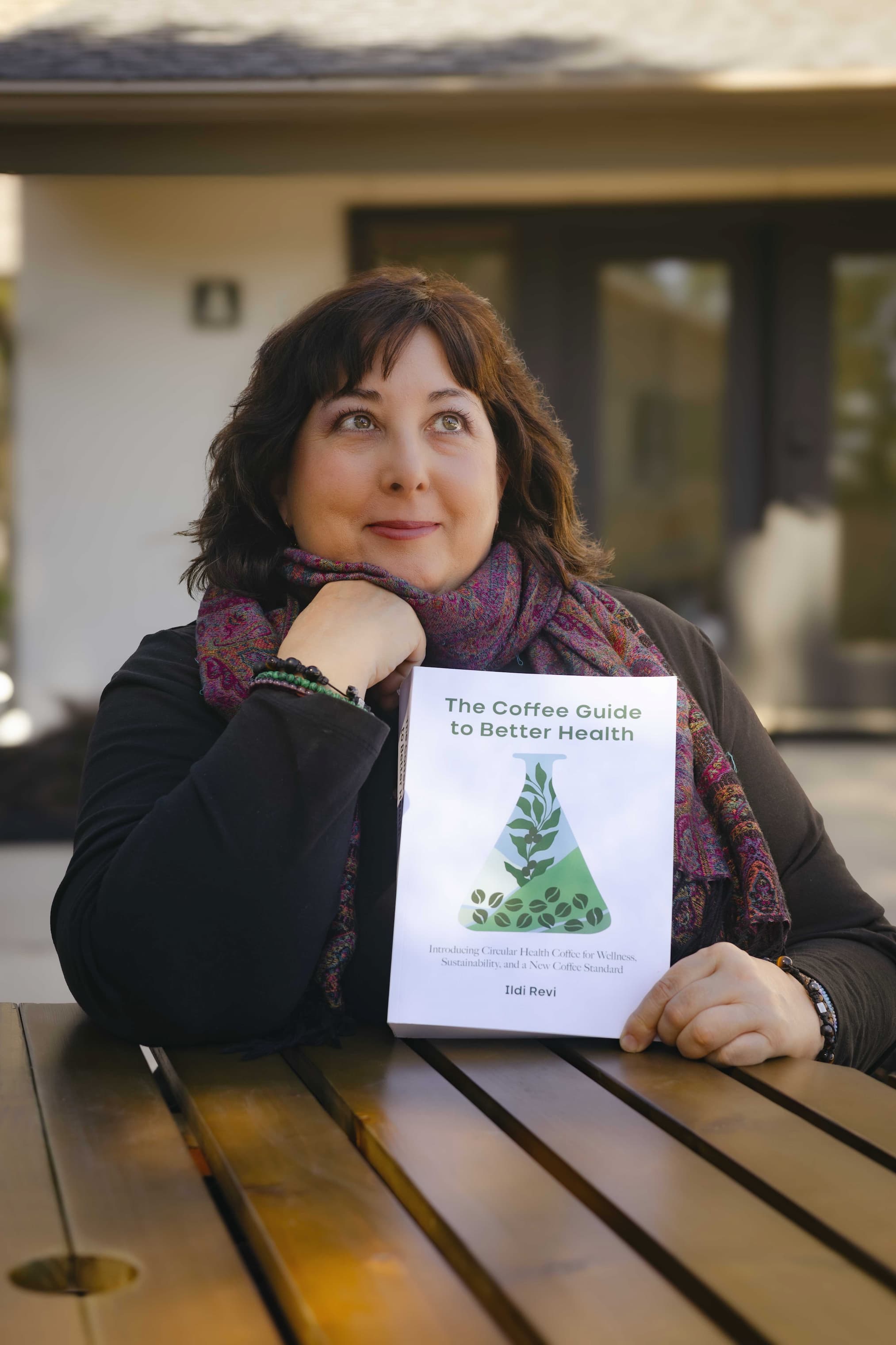 |
Ildi Revi Chief Learning Officer, Purity Coffee Author of The Coffee Guide to Better Health |